The jump from residency to independent practice is one of the biggest shifts in a radiologist's career — and one of the most stressful. Supervised training gives way to autonomous reads, faster turnaround expectations, and the weight of knowing every report you sign has real clinical consequences.
The old playbook said you had to grind it out in a traditional hospital or group practice before considering anything else. Teleradiology was for senior radiologists winding down, not for people still building their foundation. That thinking is outdated — and a growing number of early-career radiologists are proving it wrong.
The Traditional Path Isn't What It Used to Be
New graduates are walking into a practice landscape their attendings wouldn't recognize. The radiologist shortage means early-career physicians are absorbing volumes that would've been unsustainable a decade ago. Many end up in practices where mentorship is informal at best and nonexistent at worst — where the pressure to produce overshadows the need to learn.
Modern teleradiology is built to fill that gap. The best organizations have structured support systems designed specifically for early-career development — combining diverse case exposure, real mentorship, and the flexibility this generation of physicians has every right to expect.
More Cases, More Variety, Faster Growth
In a single-hospital practice, your case mix is limited to that institution's patient population and referral patterns. In teleradiology, you're reading across multiple facilities, geographies, and practice settings. The variety is dramatically broader.
That means more exposure to rare pathology, more variation in imaging protocols, and more chances to build pattern recognition across different demographics. In the first years of practice — when diagnostic confidence is still being built — that accelerated exposure is the difference between good and great.
Real Mentorship, Not Just Proximity
The myth that teleradiology eliminates mentorship is the most persistent — and the most wrong. The best teleradiology organizations have invested in structured mentorship that often surpasses what's available in traditional group practices.
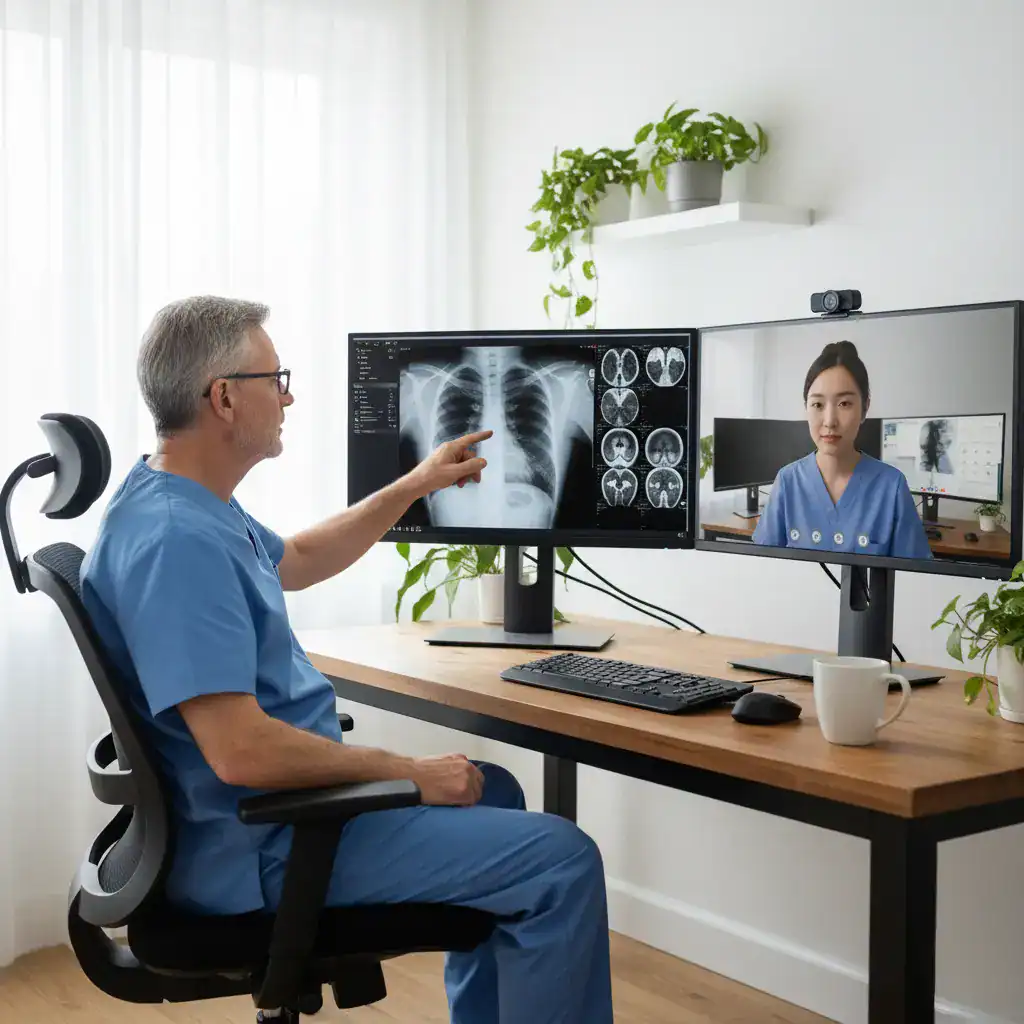
At Rapid Radiology, early-career radiologists are paired with experienced mentors available for real-time consultation during shifts. Mentors actively review cases, give feedback on reports, and help build diagnostic confidence in a supportive environment. Screen sharing, instant messaging, and collaborative viewing tools make getting a second opinion faster than walking down a hospital corridor.
Structured case review. Real-time peer consultation. Ongoing feedback — not just when something goes wrong. The best teleradiology mentorship programs create a learning environment that's more consistent and accessible than most traditional practices.
Autonomy With a Safety Net
There's a difference between being thrown in the deep end and being given the tools to swim. Early-career radiologists need autonomy — making independent diagnostic decisions is how expertise gets built. But autonomy without support leads to anxiety, second-guessing, and burnout.
Done right, teleradiology threads that needle. You read independently, building the muscle memory of autonomous practice. But subspecialty backup is a message away when a case pushes your boundaries. You get structured feedback as part of an ongoing development process, not just when something goes wrong. And you know the organization is invested in your growth — not just your throughput.
Flexibility Isn't a Perk — It's a Performance Strategy
The conversation around work-life balance in medicine has changed. What was dismissed as a generational preference is now recognized as a retention and performance strategy. Radiologists with schedule control report higher satisfaction, lower burnout, and better diagnostic accuracy.
For early-career radiologists, teleradiology isn't about working less — it's about working smarter. A set schedule with a known end time. No unexpected call. Reclaiming your commute for family, exercise, or continuing education. Building your life around a schedule you can actually plan on.
- A set schedule you can plan your life around, with no unexpected call
- 5–10 hours per week back from eliminating the commute
- Practice from anywhere with a secure internet connection
- Far less administrative overhead than hospital-based practice
- Build subspecialty expertise while keeping schedule control
- A culture that treats personal time as essential, not optional
Technology That Grows With You
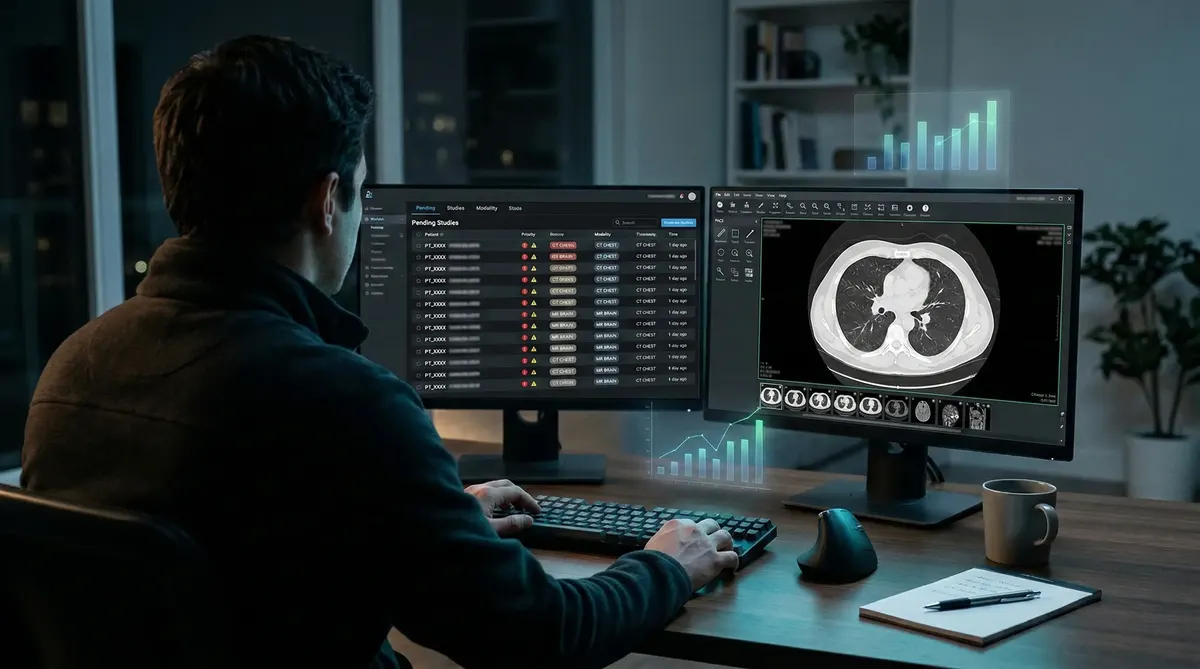
The tech stack in modern teleradiology isn't just a delivery mechanism — it's a learning accelerator. Cloud-native PACS with intelligent worklist prioritization lets you increase complexity gradually as confidence builds. AI-assisted tools provide a quality safety net without replacing your judgment. Structured reporting templates help you develop consistent, high-quality habits from day one.
At Rapid Radiology, Exceed PACS and PriorityWorklist are designed with this progression in mind. The technology adapts to you — not the other way around.
Your Career, on Your Terms
The early years of practice are where habits form, confidence builds, and career trajectories get set. Choosing an environment that prioritizes mentorship, offers diverse case exposure, invests in your tools, and respects your need for balance isn't a luxury — it's a strategic decision that shapes the radiologist you become.
Teleradiology isn't the alternative path anymore. For a growing number of early-career radiologists, it's the faster one — offering the support, flexibility, and growth that traditional models struggle to match.