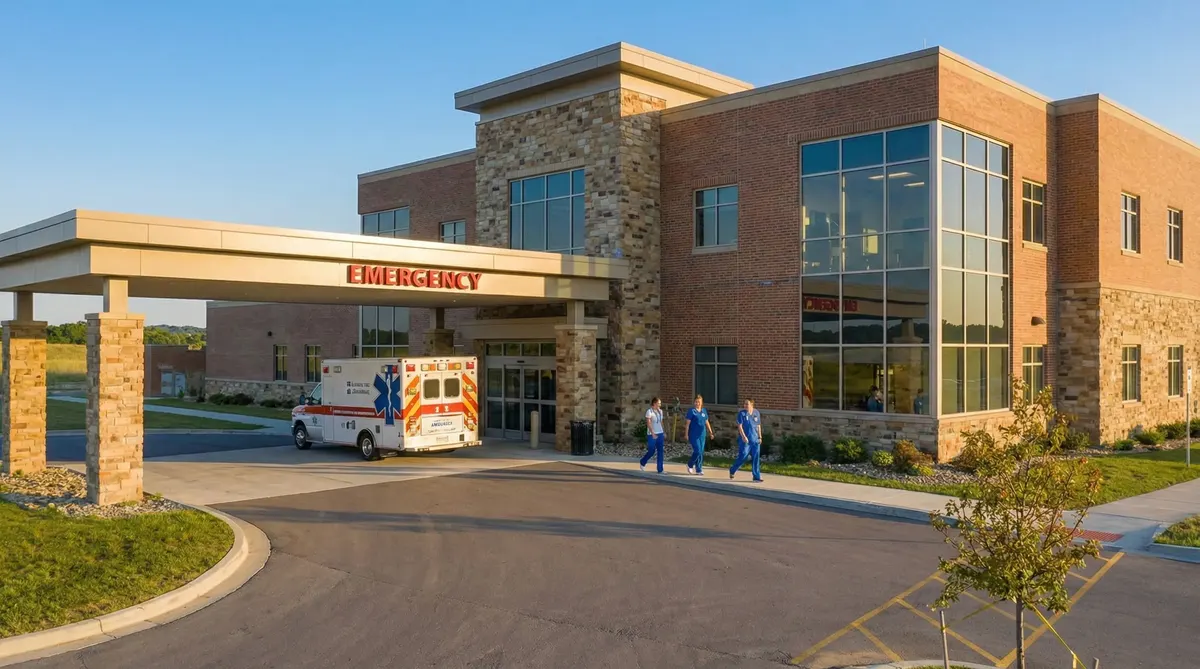
In rural America, the radiology shortage isn't a workforce statistic — it's a daily reality. Small and critical-access hospitals serve roughly 60 million Americans. They need the same imaging expertise as major urban centers. They can't attract or afford the subspecialists to provide it.
The consequences are real: longer diagnostic delays, more unnecessary transfers, and reduced access to the kind of interpretation that separates early intervention from a missed diagnosis. For these communities, the radiology gap isn't a staffing problem — it's a healthcare equity issue.
The Subspecialty Problem
General coverage is hard enough in rural settings. Subspecialty coverage — neuro, MSK, pediatric, breast — is often nonexistent. A 25-bed critical-access hospital in Montana can't support a full-time neuroradiologist. But its ER still sees strokes, TBIs, and complex neuro cases that demand expert-level reads.
The traditional answer has been to transfer patients to regional centers. But transfers are expensive, disruptive, and slow — often adding hours or days for conditions where minutes matter. For elderly patients or families without transportation, a 200-mile transfer isn't just inconvenient. It's a barrier that delays or prevents care entirely.
How Teleradiology Closes the Gap
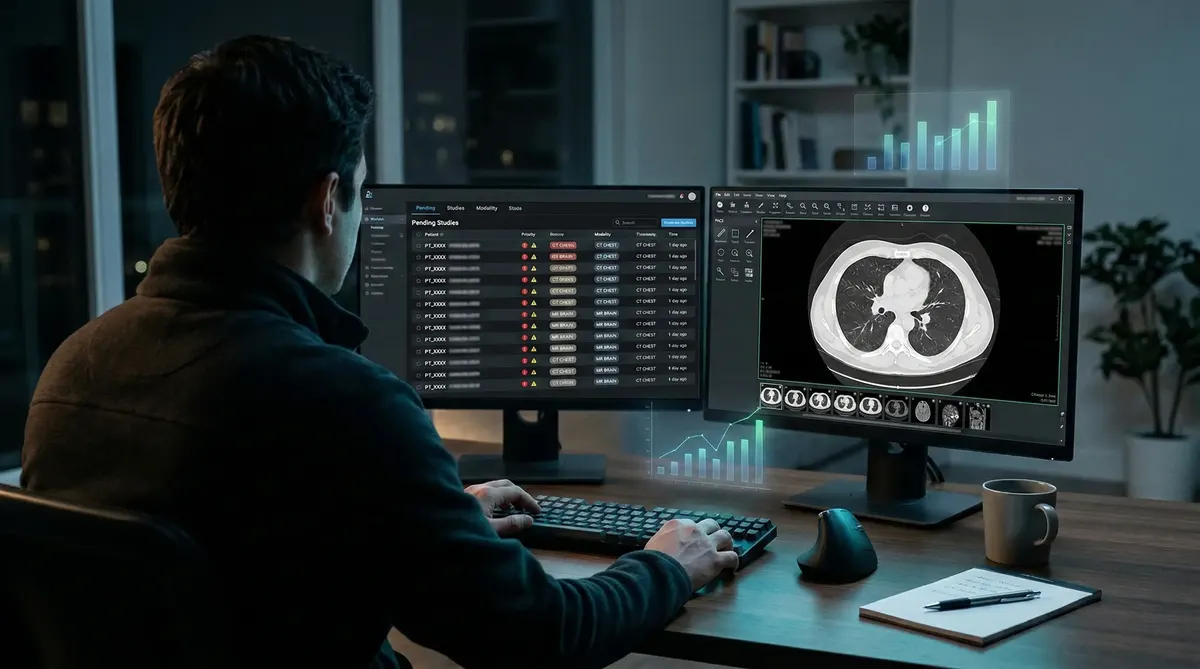
Modern teleradiology eliminates the geographic constraint. A CT scan acquired at a rural hospital in Wyoming gets interpreted by a fellowship-trained neuroradiologist in minutes — regardless of where that specialist is sitting.
This isn't a prelim or a stopgap. Today's teleradiology delivers final, subspecialty-level reads that meet the same quality standards as any academic center. Same image quality, same diagnostic tools, same clinical information. The only difference is the distance — and in a cloud-native workflow, that distance is invisible.
- 24/7 fellowship-trained subspecialists — neuro, MSK, body, breast, pediatric
- Final reads with the same turnaround as on-site interpretation
- Seamless integration with existing hospital PACS and RIS
- Closed-loop critical findings communication for patient safety
- Zero recruitment, relocation, or retention costs for the facility
- Coverage that scales with volume — no staffing commitments
The Patient Impact Is Measurable
Subspecialty interpretation changes the diagnosis or management in 10–30% of complex cases compared to general reads. In emergencies — stroke, trauma, acute abdomen — the stakes are even higher.
When a rural ED has immediate access to a neuroradiologist for a suspected stroke, the time from scan to treatment decision shrinks dramatically. When a community hospital gets a same-day MSK read on a complex joint injury, the patient avoids a 200-mile transfer and gets care locally. These aren't incremental improvements — they're transformative.
Expert imaging interpretation shouldn't depend on zip code. Teleradiology makes that principle real — delivering subspecialty reads to the communities that have gone without them the longest.
The Economics Are Straightforward
Recruiting a subspecialist to a rural location — if it's even possible — means salary premiums, relocation packages, and the constant risk of losing them. One departure can leave a facility scrambling for months.
Teleradiology flips the model. Fixed-cost, high-risk staffing becomes a variable-cost service that scales exactly with the facility's needs. Coverage is continuous, quality is consistent, and the facility skips recruitment, credentialing delays, and vacancy cycles. For many critical-access hospitals, the total cost is a fraction of equivalent on-site coverage.
Why This Work Matters for Radiologists
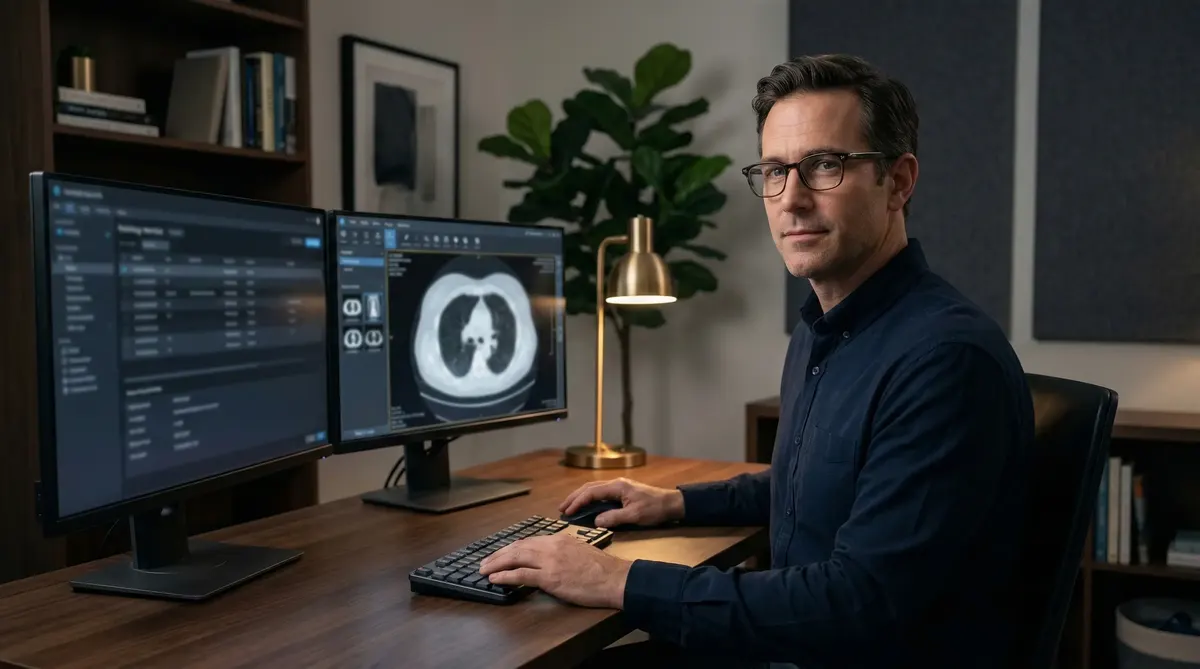
For radiologists, rural teleradiology isn't just another shift — it's some of the most impactful reading you can do. Your subspecialty expertise reaches communities that have never had access to it. Your reads directly change patient outcomes in places where the alternative was a transfer or a missed diagnosis.
At Rapid Radiology, our network includes fellowship-trained subspecialists across every major discipline, and our platform delivers their expertise to facilities of every size. Where a patient lives shouldn't determine the quality of their care — and with the right team and the right technology, it doesn't have to.